

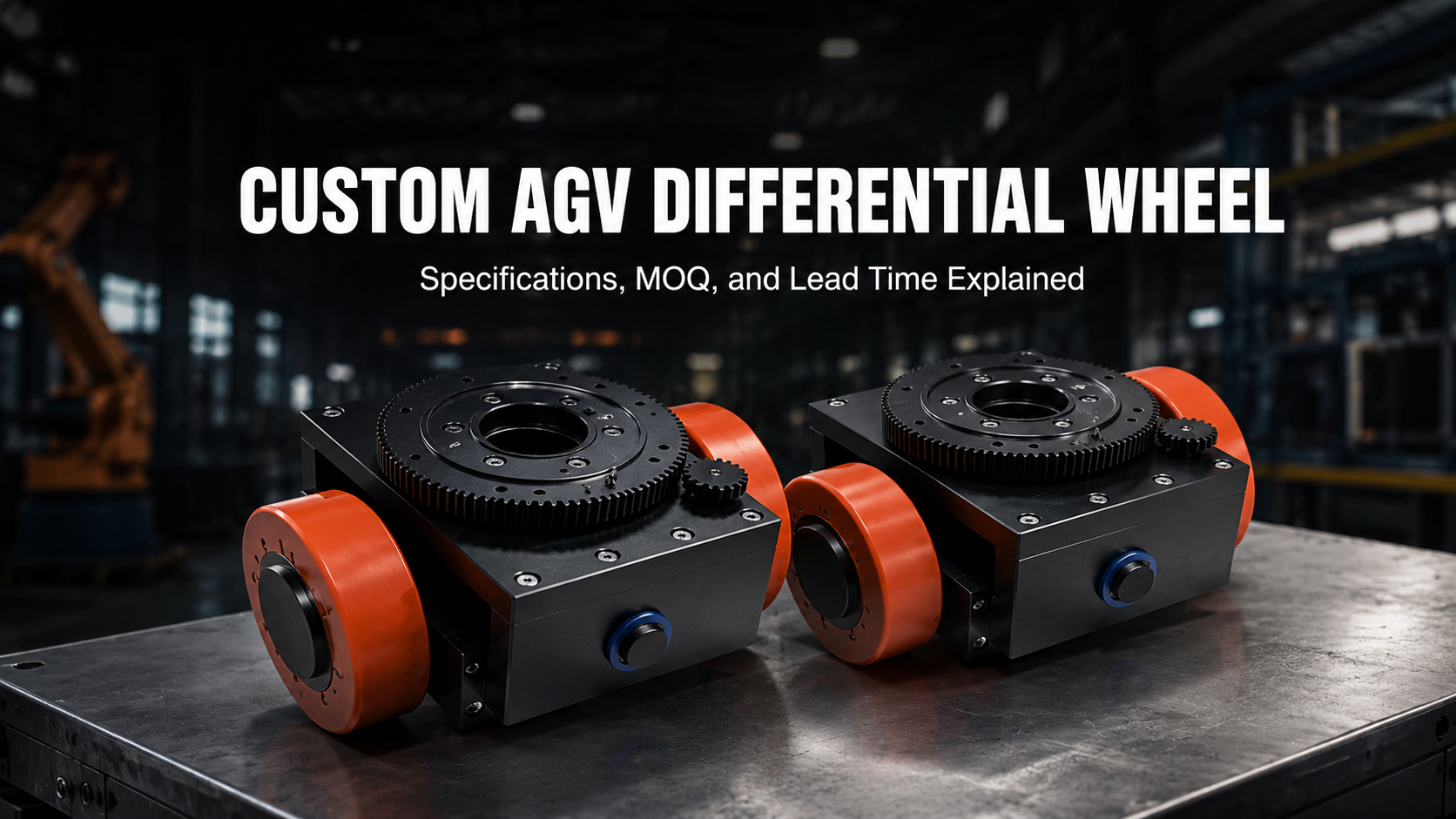
Bir AGV diferansiyel tekerlek ünitesini özelleştirmek, tek bir motoru özelleştirmekten daha kapsamlı bir süreçtir; çünkü diferansiyel bir tahrik ünitesi aslında aynı şekilde çalışması gereken iki eşleşmiş aktarma organından oluşur. Her iki tahrik motoru, redüktörleri, enkoderleri ve tekerlekleri simetrik bir çift olarak belirlenmeli; dingil mesafesi ve tekerlek konfigürasyonu da bunlarla birlikte tanımlanmalıdır. Bu kılavuz, fiyat teklifi istemeden önce nelerin hazırlanması gerektiğini, özel bir diferansiyel tekerlek ünitesi için MOQ (minimum sipariş miktarı) ve teslim sürelerinin genellikle nasıl işlediğini ve bir projeyi en çok geciktiren veya yanlış parçalara yol açan hataları açıklamaktadır.

Alıcılar Neden AGV Diferansiyel Tekerlek Ünitesini Özelleştirir?
Standart diferansiyel tahrik üniteleri, depo AMR'leri ve hafif AGV platformlarının geniş bir yelpazesini kapsar; ancak bir projenin şasisi, yük kapasitesi veya zemin koşulları mevcut bir ürün serisinin desteklediği sınırların dışına çıktığında özelleştirme gerekli hale gelir. Yaygın tetikleyiciler arasında; standart konfigürasyonlarla uyuşmayan bir dingil mesafesi, mevcut ürün sınıfları arasında kalan bir yük kapasitesi gereksinimi, mevcut bir şasiye standart dışı bir montaj arayüzü veya platform için seçilen bir kontrolcüyle eşleşmesi gereken bir iletişim protokolü bulunur. Bazı durumlarda ise tek etken kurulum alanıdır; aktarma organı seçilmeden önce tamamlanmış bir şasi tasarımı, katalogdaki bir ünitenin olduğu gibi sığması için çok az yer bırakabilir.
Özel Diferansiyel Tekerlek Ünitesi İstemeden Önce Tanımlanması Gereken Özellikler
Diferansiyel bir tahrik ünitesi, her iki tarafın da aynı şekilde çalışmasına bağlı olduğundan, eksik veya tutarsız teknik özellikler, fiyat teklifi gecikmelerinin ve yeniden işleme süreçlerinin en yaygın nedenidir.
Motor ve Redüktör Eşleşmesi
Her iki tahrik motoru da eşleşmiş nominal tork, nominal hız, voltaj ve enkoder arayüzüne sahip olmalıdır; iki taraf arasındaki asimetri, yazılımla düzeltilmesi zor olan ve çalışma sırasında yön sapması olarak ortaya çıkan bir durumdur. Redüktör tahvil oranı, beklenen yük kapasitesi ve hedef seyir hızı ile birlikte belirtilmelidir; çünkü tahvil oranı, tekerlek çapı ve motor hızı birlikte aracın gerçek hızını belirler.
Dingil Mesafesi ve Mekanik Uyumluluk
Dingil mesafesi — iki tahrik tekerleği arasındaki merkezden merkeze mesafe — hem dönüş davranışını hem de ünitenin mevcut bir şasi ayak izine nasıl sığdığını etkiler. Alıcılar, genel montaj boyutları ve tekerlek yerleşimi ile birlikte dingil mesafesi gereksinimlerini sağlamalıdır; çünkü tahrik ünitesi ve tekerlek konfigürasyonu bağımsız olarak değil, birlikte değerlendirilmelidir.
Geri Bildirim ve İletişim
Enkoder çözünürlüğü gereksinimlerini ve yerleşik kontrolcünün beklediği CANopen, RS485 veya EtherCAT gibi iletişim protokolünü belirtin. Uyumsuz bir protokol, ancak üniteler ulaştıktan sonra ortaya çıkan yaygın bir entegrasyon sorunudur; bu nedenle bunu erkenden teyit etmek, geç aşamada oluşabilecek uyumluluk sorunlarını önler.
Çevresel ve Yük Gereksinimleri
Zemin koşulu, şasi ağırlığı dahil beklenen yük, ortam sıcaklığı ve gerekli IP koruma sınıfı, bileşen seçimini etkiler. Özellikle zemin koşulu bilgisinin eksik bırakılması yaygın bir boşluktur, çünkü bu durum tekerlek taban malzemesini ve motor torku marjı önerilerini doğrudan etkiler.
Özel Diferansiyel Tekerlek Üniteleri İçin MOQ'yu Anlamak
Özel bir diferansiyel tekerlek ünitesi için minimum sipariş miktarı, tek bir özel motora göre genellikle daha yüksektir; çünkü ünite; eşleşmiş motor çiftlerini, özel bir çerçeveyi veya montaj yapısını ve genellikle kendi kalıplarını gerektiren standart dışı bir dingil mesafesini içerir.
Özel Üniteler İçin Neden MOQ Vardır?
Eşleşmiş motor çiftleri ve özel bir çerçeve veya montaj braketi üretmek, çok küçük bir partiye paylaştırılması verimli olmayan sabit kurulum maliyetlerini içerir. MOQ, bu sabit maliyetlerin bir üretim serisine makul bir şekilde yayılabileceği noktayı yansıtır.
Tipik MOQ Aralıkları ve Onları Neler Etkiler?
Mevcut bir dingil mesafesi ve montaj ailesi içinde kalarak sadece motor gücünü veya dişli oranını ayarlayan talepler, tamamen özel bir dingil mesafesi veya çerçeve tasarımına göre genellikle daha düşük MOQ taşır. Tamamen yeni bir çerçeve veya standart dışı bir montaj arayüzü, en yüksek tekrarlanamayan mühendislik çalışmasını gerektirdiğinden genellikle en yüksek MOQ eşiğine sahiptir.
MOQ Engellerini Azaltma Yolları
Alıcılar, motor gücünü, dişli oranını veya enkoder tipini özelleştirirken bile dingil mesafesini ve montaj arayüzünü mevcut bir ürün ailesi içinde tutarak genellikle MOQ gereksinimlerini azaltabilirler. Birden fazla platform varyantındaki gereksinimleri tek bir siparişte birleştirmek veya tedarikçiyle gerçekçi gelecekteki hacmi önceden görüşmek de, ilk küçük siparişe kıyasla daha fazla esneklik yaratma eğilimindedir.

Özel Diferansiyel Tekerlek Siparişleri İçin Teslim Süresi
Özel bir diferansiyel tekerlek ünitesinin teslim süresi birkaç farklı aşamayı yansıtır; standart dışı bir dingil mesafesi veya çerçeve, süreci genellikle motor özelliklerinde yapılan bir değişiklikten daha fazla uzatır.
Tasarım ve Numune Aşaması
Bu aşama, teknik şartname incelemesini ve tamamen özel tasarımlar için çerçeve ve montaj yapısına yönelik mekanik çizim çalışmalarını kapsar. Mevcut bir dingil mesafesi ailesi içindeki konfigürasyon düzeyindeki değişiklikler, bu aşamada yeni bir çerçeve tasarımına göre genellikle daha hızlı ilerler.
Kalıp ve Seri Üretim Aşaması
Bir numune onaylandıktan sonra, çerçeve, montaj braketi veya tekerlek göbeği için gereken tüm yeni kalıplar, ilk üretim serisi başlamadan önce tamamlanır. Diferansiyel bir tahrik ünitesi için bu aşama, genellikle her iki eşleşmiş motor-redüktör çiftinin sadece numune ünitesinde değil, tüm üretim partisinde simetrik performans gösterdiğinin doğrulanmasını içerir.
Teslim Süresini Uzatan veya Kısaltan Faktörler
Eksik dingil mesafesi veya montaj özellikleri, birden fazla numune revizyon döngüsü ve özel enkoderler için bileşen tedarik süresi, yaygın gecikme nedenleridir. Mekanik çizimleri eksiksiz bir şekilde önceden sunmak ve numuneleri hızlı bir şekilde onaylamak, zaman çizelgesini takip etmenin en etkili yollarıdır.
Adım Adım Özel Sipariş Süreci
Özel bir siparişin sıralamasını anlamak, alıcıların kendi proje zaman çizelgelerini gerçekçi bir şekilde planlamalarına yardımcı olur.
Teknik Gereksinimlerin Sunulması
Süreç genellikle motor ve redüktör özellikleri, dingil mesafesi ve montaj boyutları, enkoder ve iletişim gereksinimleri ve çevresel koşulları kapsayan bir gereksinim belgesi ile başlar. Bu aşamada eksiksiz dokümantasyon, doğru bir fiyat teklifinin ne kadar hızlı geleceği konusundaki en büyük tek faktördür.
Numune Değerlendirme ve Onay
Tedarikçiler, alıcının test etmesi için bir numune üretir; ideal olarak, iki tahrik tarafının gerçek yük altında simetrik davrandığını doğrulamak için düz bir hat ve yerinde dönüş testi içerir. Bu tür bir hareket testi olmadan bir numuneyi onaylamak, yön sapması sorununun seri üretim başlayana kadar fark edilmemesinin en yaygın yollarından biridir.
Seri Üretim ve Kalite Kontrol
Numune onayından sonra üretim, genellikle iki motor-redüktör düzeneği için eşleşmiş çift doğrulamasını içeren tanımlanmış kalite kontrol noktalarıyla ilerler. Alıcılar, özellikle nihai platformun kendi uyumluluk gereksinimleri varsa, sevkiyata hangi test verilerinin veya belgelerin eşlik edeceğini teyit etmelidir.

Alıcıların Diferansiyel Tekerlek Ünitesini Özelleştirirken Yaptığı Yaygın Hatalar
Küçük bir grup tekrarlayan sorun, özel diferansiyel tekerlek siparişlerindeki gecikmelerin ve yeniden işlemlerin çoğundan sorumludur. İki tahrik motorunu eşleşmiş bir çift olarak değil de bağımsız olarak belirlemek en yaygın olanlardan biridir; çünkü iki taraf arasındaki tork veya hız derecesindeki küçük farklılıklar bile kurulduğunda doğrudan yön sapmasına dönüşür. Dingil mesafesini ve tekerlek yerleşimini ayrı kararlar olarak ele almak, bunları tüm şasi ayak izine göre birlikte değerlendirmek yerine, geç aşama yeniden işlemenin bir diğer sık kaynağıdır. Son olarak, numune onayı sırasında gerçek bir hareket testini atlamak — yalnızca veri sayfası incelemesine güvenmek — simetri sorunlarının ancak tam bir üretim partisi gönderildikten sonra keşfedilmesinin yaygın bir yoludur.
SSS
Özel bir AGV diferansiyel tekerlek ünitesi için tipik MOQ nedir?
MOQ, özelleştirmenin mevcut bir dingil mesafesi ve çerçeve ailesi içinde kalıp kalmadığına veya yeni bir çerçeve tasarımı gerektirip gerektirmediğine büyük ölçüde bağlıdır. Konfigürasyon düzeyindeki değişiklikler, tamamen özel bir mekanik tasarıma göre genellikle daha düşük MOQ taşır, bu nedenle bu ayrımı erkenden netleştirmek gerçekçi beklentiler oluşturmaya yardımcı olur. Standart bir diferansiyel tahrik ünitesinin nasıl yapılandırıldığına dair arka plan bilgisi için bu AGV diferansiyel tahrik ünitesi kılavuzuna bakın.
Özel bir diferansiyel tekerlek ünitesi genellikle ne kadar sürer?
Teslim süresi, dingil mesafesinin ve çerçevenin yeni kalıplar gerektirip gerektirmediğine bağlıdır. Mevcut bir ürün ailesi içindeki konfigürasyon tabanlı özelleştirme, tamamen özel bir çerçeve tasarımından genellikle daha hızlı ilerler ve eksiksiz özelliklerin önceden sunulması, genel zaman çizelgesini kısaltmanın en güvenilir yoludur.
Neden her iki tahrik motorunun birlikte belirtilmesi gerekiyor?
Diferansiyel bir tahrik ünitesi, iki tekerleği arasındaki hız farkını kullanarak yönlendirir, bu nedenle iki taraf arasındaki tork, hız derecesi veya enkoder davranışındaki herhangi bir uyumsuzluk, çalışma sırasında yön hatası olarak ortaya çıkar. İki motoru bağımsız olarak değil, eşleşmiş bir çift olarak belirlemek ve sipariş etmek bu sorunu önler.
Tam bir üretim siparişi vermeden önce numune isteyebilir miyim?
Evet ve özellikle diferansiyel tekerlek üniteleri için şiddetle tavsiye edilir; çünkü bir numune, alıcının tam bir partiye taahhütte bulunmadan önce gerçek yük altında düz hat izleme ve yerinde dönüş davranışını doğrulamasına olanak tanır.
İlk sorgumda hangi bilgileri eklemeliyim?
Her iki taraf için motor ve redüktör özellikleri, dingil mesafesi ve montaj boyutları, enkoder çözünürlüğü ve iletişim protokolü, tekerlek konfigürasyonu, şasi ağırlığı dahil yük kapasitesi ve beklenen sipariş hacmi, bir tedarikçinin doğru teklif vermesi için gereken minimum ayrıntılardır.

Sonuç
Özel bir AGV diferansiyel tekerlek ünitesi, her iki tahrik tarafı ilk sorgulamadan itibaren eşleşmiş bir sistem olarak ele alındığında — iki bağımsız motor olarak belirtilmediğinde veya sipariş edilmediğinde — tasarım, numune ve üretim aşamalarında daha öngörülebilir bir şekilde ilerler. MOQ ve teslim süresi, dingil mesafesinin ve çerçevenin mevcut bir ürün ailesi içinde kalıp kalmadığına veya yeni kalıplar gerektirip gerektirmediğine bağlı olarak önemli ölçüde değişir, bu nedenle bu ayrımı erkenden netleştirmek bir alıcının yapabileceği en yararlı şeylerden biridir. Diferansiyel tahrikin ilk etapta doğru mimari olup olmadığına hala karar veren okuyucular için, bu diferansiyel tahrik ünitesi kılavuzundaki daha geniş karşılaştırma, özel şartnameye geçmeden önce direksiyon ve çok yönlü alternatiflere karşı nasıl bir performans sergilediğini kapsamaktadır.
Paylaşmak:
Yüksek Performanslı AGV ve AMR için Dik Açılı Servo Planet Redüktörler
AGV/AMR Yönlendirmeli Sürüş ve Diferansiyel Sürüş: Performans Karşılaştırması ve Seçim Rehberi