

Forklift AGV'ler ağır yükleri taşırken tekerlek patinajı, dengesiz hareket veya aşırı tekerlek aşınması gibi sorunlar yaşar mı?
Birçok durumda sorun, yetersiz motor gücünden kaynaklanmaz. Asıl sorun genellikle yanlış yük dağılımı, yetersiz çekiş, uygun olmayan tekerlek malzemesi veya tekerlek sistemi ile çalışma ortamı arasındaki uyumsuzluk gibi uygunsuz tahrik tekerleği tasarımından kaynaklanır.
Standart depo AMR'lerinden farklı olarak, forklift AGV'lerin daha ağır yükleri taşırken istikrarlı konumlandırmayı ve güvenilir çalışmayı sürdürmeleri gerekir. Tahrik tekerlekleri yeterli çekiş sağlamalı, sürekli endüstriyel kullanıma dayanmalı ve farklı zemin koşullarına uyum sağlamalıdır.
AGV hareket çözümleri geliştirme konusundaki uzun yıllara dayanan tecrübesiyle HKT ROBOT, kompakt mobil robotlardan ağır hizmet tipi AGV'lere kadar çeşitli uygulamalar için tahrik tekerleği sistemleri sunmaktadır. Bu makale, mühendislerin forklift AGV uygulamaları için AGV tahrik tekerleklerini seçerken göz önünde bulundurmaları gereken temel faktörleri açıklamaktadır.

Tahrik Tekerlekleri Forklift AGV'ler İçin Neden Kritiktir?
Tahrik tekerleği, bir forklift AGV'deki en önemli mekanik bileşenlerden biridir. Motor torkunu zemine aktarmaktan ve hareket için gerekli çekiş gücünü üretmekten sorumludur.
Standart bir AMR için tahrik tekerleği esas olarak hareket kabiliyetine ve esnekliğe odaklanır. Ancak forklift AGV'ler çok daha zorlu koşullarda çalışır. Tekerlek sisteminin aracın, bataryanın, kaldırma mekanizmasının ve taşınan ürünlerin toplam ağırlığını taşıması gerekir.
Bir forklift AGV ağır bir paletle hareket etmeye başladığında, tahrik tekerleklerinin yuvarlanma direncini, hızlanma kuvvetlerini ve bazen eğim direncini aşması gerekir. Mevcut çekiş yetersizse, tekerlekler patinaj yapabilir; bu da hatalı konumlandırmaya, dengesiz harekete ve artan aşınmaya neden olur.
Bu nedenle tahrik tekerleği seçimi, sadece uygun yük değerine sahip bir tekerlek seçmekten ibaret değildir. Mühendislerin yük, tork, tekerlek yapısı, malzeme ve çalışma ortamı arasındaki tam ilişkiyi değerlendirmeleri gerekir.
Forklift AGV Tahrik Tekerlekleri Nasıl Çalışır?
Bir forklift AGV tahrik tekerleği sistemi genellikle kontrollü hareket sağlamak için birkaç bileşeni entegre eder.
Motor sürüş torkunu üretirken, dişli kutusu tork çıkışını artırır ve araç gereksinimlerini karşılamak için dönüş hızını azaltır. Enkoder hız ve konum kontrolü için geri bildirim sağlarken, fren sistemi güç kesildiğinde araç konumunu korumaya yardımcı olur.
Tekerleğin kendisi, bu gücün zemine aktarılmasında doğrudan rol oynar. Çapı, malzemesi ve temas alanı; çekişi, aşınma direncini ve genel sürüş performansını etkiler.
Ağır hizmet tipi forklift AGV'ler için, tahrik tekerleği tasarımının tamamı araç yapısıyla eşleştirilmelidir. Güçlü bir motor, yetersiz tekerlek yükü veya uygun olmayan tekerlek malzemesinden kaynaklanan düşük çekiş gücünü telafi edemez.
Forklift AGV'ler İçin Tahrik Tekerleği Konfigürasyonları
Farklı forklift AGV tasarımları farklı tahrik tekerleği konfigürasyonları gerektirir. Seçim genellikle yük kapasitesine, dönüş gereksinimlerine, mevcut montaj alanına ve çalışma ortamına bağlıdır.
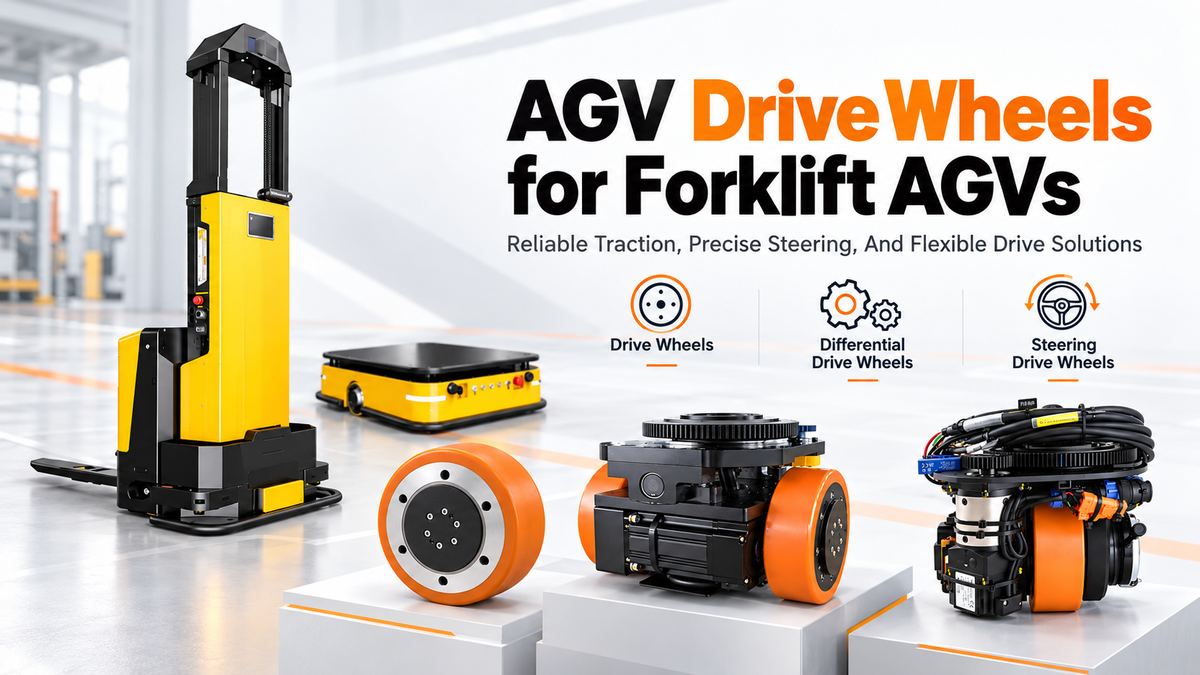
AGV Tahrik Tekerlekleri
AGV tahrik tekerlekleri, otomatik araçları hareket ettirmek için kullanılan temel çekiş bileşenleridir. Sürüş kuvvetini motor sisteminden zemine aktarırlar ve farklı yük koşullarında istikrarlı hareket için gerekli çekişi sağlarlar.
Birçok AGV uygulaması için tahrik tekerlekleri, kolay entegrasyon ve tutarlı performans elde etmek amacıyla basit ve güvenilir bir yapıda tasarlanmıştır. Araç gereksinimlerine bağlı olarak, tahrik tekerleği çıkış torkunu artırmak ve hızı azaltmak için bir dişli kutusu ile donatılabilir, bu da AGV'nin daha ağır yükleri daha iyi verimlilikle taşımasına olanak tanır.

AGV Yönlendirmeli Tahrik Tekerlekleri
Yönlendirmeli tahrik tekerlekleri, sürüş ve yönlendirme işlevlerini tek bir modülde birleştirir. Tekerlek, tahrik motoru hareket gücü sağlarken gerekli yönlendirme açısına göre dönebilir.
Bu konfigürasyon, doğru hareketin ve istikrarlı düz hat performansının önemli olduğu uygulamalar için yaygın olarak kullanılır. Ağır hizmet tipi forklift AGV'ler için yönlendirmeli tahrik tekerlekleri, büyük yükleri daha uzun mesafelerde taşırken mükemmel kontrol sağlayabilir.
Kompakt mobil robotlara kıyasla, forklift AGV'ler genellikle daha güçlü mekanik yapılar gerektirir çünkü tahrik tekerleğinin hem itiş hem de yön kontrolünü sağlaması gerekir.
Tipik uygulamalar şunları içerir:
-
Ağır hizmet tipi forklift AGV'ler
-
Malzeme taşıma AGV'leri
-
Endüstriyel çekici araçlar
-
Büyük otomasyon platformları

AGV Diferansiyel Tahrik Tekerlekleri
Diferansiyel tahrik tekerlekleri, hız farkları yoluyla dönüşü sağlamak için bağımsız olarak kontrol edilen sol ve sağ tahrik tekerleklerini kullanır.
Her iki tekerlek aynı hızda döndüğünde araç ileri gider. Bir tekerlek diğerinden daha hızlı döndüğünde, araç yön değiştirir.
Bu tasarım, yüksek esneklik ve kompakt bir yapı sağlar; bu da onu kısıtlı alanlarda çalışan AMR'lerde ve mobil robotlarda yaygın olarak kullanılır kılar.
Forklift AGV'ler için, uygulama esnek hareket, daha küçük dönüş yarıçapı veya daha basit bir mekanik düzen gerektirdiğinde diferansiyel tahrik çözümleri de düşünülebilir.

AGV Tahrik Tekerleği vs Yönlendirmeli Tahrik Tekerleği vs Diferansiyel Tahrik Tekerleği
Her iki konfigürasyon da AGV uygulamaları için kullanılabilir, ancak farklı öncelikler için tasarlanmışlardır.
| Özellik | AGV Tahrik Tekerleği | AGV Direksiyonlu Tahrik Tekerleği | AGV Diferansiyel Tahrik Tekerleği |
| Direksiyon yöntemi | Sabit sürüş yönü, şasi tasarımı veya ek mekanizmalar ile kontrol edilen direksiyon | Mekanik direksiyon mekanizması | Sağ ve sol tekerlekler arasındaki hız farkı |
| Ana işlev | Çekiş ve dengeli hareket sağlar | Hem sürüş hem de direksiyon işlevi sağlar | Sürüş ve esnek dönüş sağlar |
| Dönüş performansı | Araç tasarımına bağlıdır | Kontrollü direksiyon açısı | Sıfır yarıçapta dönüş yeteneği |
| Yapı | Basit ve entegrasyonu kolay | Direksiyon mekanizması nedeniyle daha karmaşık | Bağımsız tekerlek kontrolü ile kompakt |
| Doğrusal hareket hassasiyeti | İyi | Mükemmel | İyi |
| Kurulum alanı | Esnek | Direksiyon mekanizması için daha fazla alan gerektirir | Kompakt tasarımlar için daha esnek |
| Yük kapasitesi | Tasarıma bağlı olarak çeşitli yük seviyeleri için uygundur | Ağır hizmet uygulamaları için uygundur | Motor ve tekerlek konfigürasyonuna bağlıdır |
| Yaygın uygulamalar | Depo AGV'leri, taşıma robotları, lojistik ekipmanları | Ağır hizmet AGV'leri, forklift AGV'leri, çekici araçlar | AMR'ler, kompakt mobil robotlar, dar koridor uygulamaları |
Doğru seçim, fiili uygulamaya bağlıdır.
Örneğin, büyük bir fabrikada birkaç tonluk malzeme taşıyan bir forklift AGV, stabiliteye ve yük kapasitesine öncelik verebilir. Dar koridorlarda çalışan bir depo AMR'si ise esnekliğe ve dönüş performansına öncelik verebilir.
Yanlış Tahrik Tekeri Seçiminin Neden Olduğu Yaygın Sorunlar
Ağır Yükler Altında Tekerlek Kayması
Tekerlek kayması, AGV operasyonlarında en yaygın sorunlardan biridir.
Bu durum, tahrik tekerleği yeterli yük almadığında, tekerlek malzemesi zemin koşuluyla eşleşmediğinde veya ivmelenme ayarları mevcut çekiş gücünü aştığında gerçekleşebilir.
Motor gücünü artırmak her zaman doğru çözüm değildir. Tüm çekiş sisteminin değerlendirilmesi gerekir.
Aşırı Tekerlek Aşınması
Erken tekerlek aşınması, bakım maliyetlerini artırabilir ve AGV kullanılabilirliğini azaltabilir.
Yaygın nedenler arasında yanlış tekerlek malzemesi seçimi, hatalı yük dağılımı, sık yapılan keskin dönüşler ve uygun olmayan çalışma koşulları yer alır.
Doğru tekerlek tasarımını başlangıçta seçmek, hizmet ömrünü önemli ölçüde artırabilir.
Eğimlerde Düşük Performans
Rampalarda çalışan forklift AGV'leri ek torka ihtiyaç duyar çünkü araç yerçekimi direncini aşmak zorundadır.
Eğer şanzıman oranı, motor torku veya tekerlek boyutu düzgün seçilmezse, AGV tırmanma sırasında zorlanabilir veya yük altında hız kaybedebilir.
AGV Tahrik Tekerleklerini Seçerken Temel Faktörler
Yük Kapasitesi ve Tekerlek Yükü Dağılımı
Yük kapasitesi, AGV tahrik tekerlekleri seçilirken ilk dikkat edilen hususlardan biridir ancak nominal taşıma kapasitesi tek başına gerçek tekerlek ihtiyacını belirlemez.
Şasi, batarya, kaldırma mekanizması ve taşınan yükler dahil olmak üzere aracın toplam ağırlığı dikkate alınmalıdır.
Daha da önemlisi, tahrik tekerlekleri ile sarhoş tekerlekler arasındaki ağırlık dağılımı çekiş gücünü etkiler. Eğer tahrik tekerleği yeterince dikey yük almazsa, yüksek torklu bir motor bile yeterli çekiş oluşturamayabilir.
Doğru tasarlanmış bir AGV, sürüş kuvvetini iletmek için yeterli tekerlek basıncını korumalı ve aynı zamanda tekerlek aşınmasını hızlandıran aşırı yükten kaçınmalıdır.
Tork Gereksinimi ve Dişli Oranı
Forklift AGV'leri, hareket etmeye başlamak, hızlanmak ve yük altında rampaları tırmanmak için yeterli torka ihtiyaç duyar.
Gerekli tekerlek torku şunlara bağlıdır:
T = F * r
burada:
-
T = tekerlek torku
-
F = gerekli sürüş kuvveti
-
r = tekerlek yarıçapı
Sürüş kuvveti; araç ağırlığı, ivmelenme, zemin direnci ve eğim koşullarından etkilenir.
Yaygın bir hata, motoru sadece hız veya güç değerine göre seçmektir. Gerçekte, gerekli performansı elde etmek için motor, şanzıman oranı ve tekerlek çapı birlikte çalışmalıdır.
Tekerlek Çapı ve Yerden Yükseklik
Tekerlek çapı hem sürüş kabiliyetini hem de mekanik tasarımı etkiler.
Daha büyük bir tekerlek genellikle daha iyi engel aşma kabiliyeti ve daha düşük yuvarlanma direnci sağlar. Ayrıca düz olmayan zeminlerde performansı artırabilir.
Ancak, daha büyük tekerlekler daha fazla montaj alanı gerektirir ve aracın toplam yüksekliğini artırabilir.
Forklift AGV'leri için mühendislerin şunları dengelemesi gerekir:
-
gerekli yerden yükseklik
-
araç yüksekliği
-
seyir hızı
-
tork gereksinimi
Tekerlek Malzemesi ve Zemin Koşulu
Tekerlek malzemesinin çekiş gücü ve hizmet ömrü üzerinde önemli bir etkisi vardır.
Poliüretan (PU) tekerlekler, tutuş, aşınma direnci ve gürültü kontrolü arasında iyi bir denge sağladıkları için AGV uygulamalarında yaygın olarak kullanılır.
Ancak, en iyi malzeme fiili ortama bağlıdır.
Pürüzsüz bir epoksi zemin, beton bir fabrika zemini ve tozlu bir endüstriyel ortam farklı tekerlek özellikleri gerektirebilir.
Şunlar gibi faktörler:
-
sürtünme katsayısı
-
sıcaklık
-
kirlenme
-
çalışma saatleri
tekerlek seçimi sırasında dikkate alınmalıdır.
HKT ROBOT AGV Tahrik Tekeri Çözümleri
2013 yılında kurulan HKT ROBOT, AGV hareket bileşenleri konusunda uzmanlaşmıştır ve farklı endüstriyel otomasyon uygulamaları için özelleştirilmiş tahrik tekeri çözümleri sunmaktadır.
Ürün yelpazemiz; kompakt AMR'ler, depo robotları ve ağır hizmet tipi malzeme taşıma AGV'leri dahil olmak üzere 400 kg'dan 10.000 kg'a kadar yük taşıma kapasitesine sahip AGV sürüş çözümlerini kapsamaktadır.
Uygulama gereksinimlerine bağlı olarak HKT ROBOT; direksiyonlu tahrik tekerlek sistemleri, diferansiyel tahrik tekeri çözümleri, servo tahrik tekerlekleri ve farklı AGV ve AMR tasarımları için entegre motor ve şanzıman çözümleri sunar.
Tahrik tekeri çözümlerimiz; farklı kontrol ve işletim gereksinimlerini karşılamak için 24V veya 48V servo sistemler, CANopen haberleşme, artımlı veya mutlak enkoderler, çok turlu mutlak enkoderler ve fren seçenekleri ile yapılandırılabilir.
Ağır hizmet uygulamaları için HKT ROBOT, taşıma kapasitesi, seyir hızı, tekerlek düzeni, montaj alanı ve çalışma koşulları dahil olmak üzere aracın gerçek ihtiyaçlarına göre sürüş sistemleri geliştirir.
Forklift AGV'niz için doğru tahrik tekerini seçme konusunda yardıma ihtiyacınız varsa, aracınızın yük, hız, tekerlek boyutu, montaj alanı ve çalışma koşulu bilgilerini bize gönderin. HKT ROBOT, uygun tahrik tekeri yapılandırmasını değerlendirmenize yardımcı olabilir ve uygulamanız için pratik bir çözüm önerisinde bulunabilir.
Sonuç
AGV tahrik tekerlekleri, forklift AGV'lerin performansında kritik bir rol oynar. Çekiş gücünü, hareket hassasiyetini, güvenilirliği ve işletme maliyetlerini doğrudan etkilerler.
Başarılı bir tahrik tekerleği çözümü, yüksek yük kapasiteli bir tekerlek seçmekten daha fazlasını gerektirir. Mühendislerin araç ağırlığı, tork gereksinimleri, tekerlek malzemesi, zemin koşulları ve hareket gereksinimleri dahil olmak üzere tüm sistemi dikkate almaları gerekir.
Kompakt AMR'lerden ağır hizmet tipi forklift AGV'lere kadar HKT ROBOT, farklı endüstriyel uygulamalar için tasarlanmış özelleştirilmiş tahrik tekerleği çözümleri sunar.
Doğru tahrik tekerleğini erken tasarım aşamasında seçmek, AGV güvenilirliğini artırmaya ve uzun vadeli bakım zorluklarını azaltmaya yardımcı olabilir.
SSS
1. AGV tahrik tekerlekleri farklı forklift AGV tasarımları için özelleştirilebilir mi?
Evet. AGV tahrik tekerleklerinin genellikle yük kapasitesi, kurulum alanı, seyir hızı ve kontrol sistemi gereksinimleri dahil olmak üzere araç yapısıyla eşleştirilmesi gerekir. Ağır hizmet uygulamaları için genellikle özel çözümler gereklidir.
2. AGV tahrik tekerlekleri genellikle ne kadar dayanır?
Hizmet ömrü; taşıma kapasitesi, çalışma saatleri, zemin durumu, tekerlek malzemesi ve sürüş sıklığı dahil olmak üzere birçok faktöre bağlıdır. Temiz bir depo ortamında kullanılan bir tekerleğin ömrü, ağır sanayi ortamında çalışana göre farklılık gösterebilir.
3. Forklift AGV'lerde her zaman daha büyük tahrik tekerlekleri mi kullanılmalıdır?
Şart değil. Daha büyük tekerlekler engel aşma kabiliyetini artırabilir ve yuvarlanma direncini düşürebilir, ancak aynı zamanda daha fazla kurulum alanı gerektirirler. Doğru tekerlek boyutu, araç tasarımına ve işletim gereksinimlerine bağlıdır.
4. Bir AGV daha ağır yükler taşırken neden çekiş kaybeder?
Ağır yükler, tekerlek yük dağılımını değiştirebilir ve tahrik tekerleklerinin etkin çekiş gücünü azaltabilir. Çözüm; tekerlek yükünün ayarlanmasını, farklı tekerlek malzemelerinin seçilmesini veya tahrik konfigürasyonunun yeniden tasarlanmasını içerebilir.
5. Aynı tahrik tekerleği farklı AGV uygulamaları için kullanılabilir mi?
Her zaman değil. Farklı AGV'lerin yük, hız, dönüş yöntemi ve çalışma ortamı için farklı gereksinimleri vardır. Küçük bir AMR için tasarlanmış bir tahrik tekerleği, tonlarca ağırlıktaki bir forklift AGV için uygun olmayabilir.
6. AGV tahrik tekerlekleri için tipik teslim süresi nedir?
Teslim süresi stok durumuna bağlıdır. İstenen model stokta varsa, teslimat hızlı bir şekilde ayarlanabilir. Stokta olmayan modeller için yeniden üretim genellikle yaklaşık 30–40 gün sürer. Güncel durumu doğrulamak için lütfen bizimle iletişime geçin.
Paylaşmak:
AGV Sürüş Motoru Çözümleri: 4 Yaygın Seçenek Açıklandı
AGV/AMR Redüktör Tipleri ve Seçim Kılavuzu