

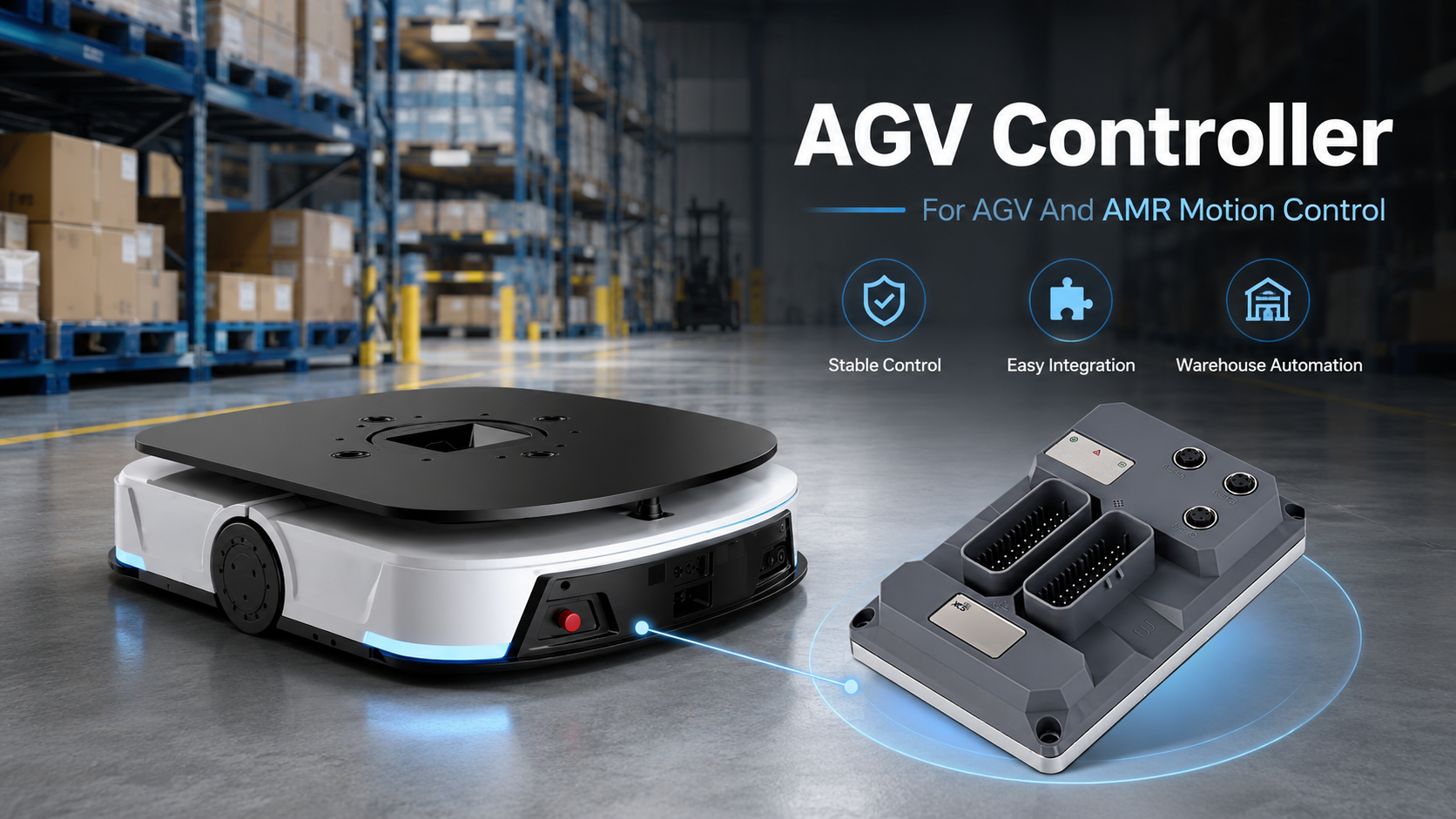
Bir AGV kontrolcüsü bir veri sayfasında mükemmel derecede uygun görünebilir ve araç devreye alma aşamasına ulaştığında yine de sorunlara yol açabilir.
Bunun nedeni genellikle basittir: kontrolcü, şasi mimarisi tam olarak dikkate alınmadan önce işlemci, I/O sayısı veya haberleşme portlarına göre seçilmiştir.
Diferansiyel tahrikli bir AMR, tek dümenli bir AGV ve dört dümenli ağır hizmet tipi bir araç, kontrolcüden aynı işi yapmasını istemez. Motor sayısı, dümenleme eksenleri, enkoderler, geri bildirim sinyalleri ve senkronizasyon gereksinimleri çok farklı olabilir.
Bu nedenle bir AGV kontrolcüsü seçmeden önce tek bir soruyla başlayın: Aracın nasıl hareket etmesi gerekiyor?

AGV Sürüş Mimarınızla Başlayın
Sürüş konfigürasyonu, hareket kontrolü iş yükünün çoğunu belirler.
Diferansiyel tahrikli bir araç temel olarak iki tahrikli tekerlek arasındaki hız farkını kontrol eder. Dümenlemeli bir araç ise hem çekiş hızını hem de dümenleme açısını kontrol etmelidir. Birkaç dümenleme ünitesi birlikte kullanıldığında, senkronizasyon giderek daha önemli hale gelir.
HKT ROBOT'un mevcut kontrolcü serisi; diferansiyel tahrik, dümenleme tekerleği ve çok yönlü (omni-wheel) sistemler dahil olmak üzere ana akım mobil robot şasi konfigürasyonları etrafında tasarlanmıştır.
| Sürüş Sistemi | Ana Kontrolcü Görevi | Tipik Kontrol Karmaşıklığı |
| Diferansiyel Tahrik | Sol ve Sağ Tekerlek Hızını Koordine Etme | Düşük - Orta |
| Tek Dümenleme Tekerleği | Çekiş ve Dümenleme Açısını Kontrol Etme | Orta |
| Çift Dümenleme Tekerleği | İki Çekiş ve İki Dümenleme Eksenini Senkronize Etme | Orta - Yüksek |
| Dört Dümenleme Tekerleği | Çoklu Tahrik ve Dümenleme Eksenlerini Koordine Etme | Yüksek |
| Çok Yönlü / Mecanum Tahrik | Çoklu Tekerlek Hızlarını Bağımsız Olarak Koordine Etme | Yüksek |
Buradaki mesele, bir sistemin diğerinden daha iyi olması değildir.
Doğru AGV kontrolcüsü, aracınızın gerçekten ihtiyaç duyduğu harekete uyum sağlayan kontrolcüdür.
Diferansiyel Tahrik Sistemleri için AGV Kontrolcüsü
Diferansiyel tahrikli bir AGV normalde şasinin zıt taraflarına yerleştirilmiş iki tahrikli tekerleği, pasif destek tekerlekleri veya döner tekerleklerle birlikte kullanır.
Her iki tekerlek aynı hızda döndüğünde araç düz gider. Hız farkını değiştirmek aracın dönmesini sağlar, ters tekerlek yönleri ise şasinin olduğu yerde dönmesine olanak tanır. Standart diferansiyel tahrik, gerçek yanal hareket sağlamaz.
Bu durum kontrol mantığını nispeten basit hale getirir, ancak yine de bazı detaylar önemlidir.
Kontrolcünün her iki tahrik motorundan da güvenilir hız geri bildirimi alması gerekir. Tekerlek çapı, dişli oranı, enkoder geri bildirimi, hızlanma ayarları ve sol-sağ motor eşleşmesi, aracın yönünü ne kadar iyi koruyacağını etkiler.
Tipik bir diferansiyel tahrik projesi için şunları kontrol edin:
-
Çekiş ekseni sayısı
-
Motor voltajı ve gücü
-
Enkoder arayüzü
-
Tekerlek çapı ve dişli oranı
-
CAN / CANopen veya diğer haberleşme protokolleri
-
Sensörler ve güvenlik cihazları için gerekli I/O
Çift kanallı motor kontrolü, diferansiyel mobil robotlarda yaygın olarak kullanılır çünkü her iki motor tamamen bağımsız sistemler olarak ele alınmak yerine birlikte koordine edilebilir. Örneğin Roboteq, bu mimariyi özellikle diferansiyel mobil robotlar için kullanır.
En uygun kullanım: depo AMR'leri, teslimat robotları, hafif hizmet tipi taşıma AGV'leri ve yan hareket gerektirmeyen ancak kompakt dönüşe ihtiyaç duyan araçlar.

Tek Dümenleme Tekerleği Sistemleri için AGV Kontrolcüsü
Dümenlemeli tahrik farklıdır.
Modül genellikle bir tahrik motoru, dümenleme motoru, dişli kutusu, tekerlek ve dümenleme açısı geri bildirimini birleştirir. AGV hareket kontrolcüsü, sadece tekerlek hızını kontrol etmek yerine her ikisini de koordine etmelidir:
Çekiş Hızı + Dümenleme Açısı
HKT ROBOT'un dümenlemeli tahrik mimarisi bu prensibi izler: kontrolcü, tekerlek hızını ve dümenleme açısını aracın hızına ve istenen yöne göre ayarlar.
Pasif döner tekerlekli tek dümenli bir AGV için kontrolcü genellikle en az bir çekiş eksenini ve bir dümenleme eksenini yönetir.
Bu da dümenleme geri bildiriminin önemli hale geldiği anlamına gelir.
Kontrolcünün tekerleğin ne kadar hızlı döndüğünü değil, aynı zamanda nereye işaret ettiğini de bilmesi gerekir. Sisteme bağlı olarak bu durum mutlak dümenleme enkoderi, referans noktalı artımlı enkoder veya başka bir açı geri bildirim yöntemini içerebilir.
Bu nedenle iki tekerlekli diferansiyel platformda iyi çalışan bir kontrolcü, dümenlemeli şasi için otomatik olarak doğru seçim değildir.
En uygun kullanım: kompakt taşıma AGV'leri, çekici AGV'ler ve geleneksel ileri, geri ve dümenleme hareketi gerektiren araçlar.
Çift Dümenleme Tekerleği AGV'leri Daha İyi Senkronizasyona İhtiyaç Duyar
İki dümenleme tahrik tekerleği kullanmak çekişi artırır ve şasiye daha fazla esneklik kazandırır, ancak aynı zamanda kontrol iş yükünü de artırır.
Bir dümenleme açısı ve bir çekiş hızı yerine, kontrolcünün artık şunları koordine etmesi gerekebilir:
2 Çekiş Ekseni + 2 Dümenleme Ekseni
Dümenleme üniteleri sadece yaklaşık olarak aynı yöne işaret edemez.
Dümenleme açıları, hız komutları, sıfır konumları ve araç geometrisi birlikte çalışmalıdır. Dümenleme sıfır ofseti, dişli boşluğu, kurulum doğruluğu, lastik deformasyonu veya zayıf senkronizasyondan kaynaklanan hatalar, yol takibini ve yanaşma performansını etkileyebilir.
Bu tür bir proje için AGV araç kontrolcüsünün şunları yönetip yönetemeyeceğini kontrol edin:
-
Çoklu servo eksenleri
-
Dümenleme açısı geri bildirimi
-
Koordineli hareket
-
Enkoder kalibrasyonu
-
Araç geometrisi parametreleri
-
Servo sürücülerle hızlı ve kararlı haberleşme
Bu mimari, araç daha yüksek bir yük taşıdığında veya temel bir diferansiyel tahrik platformundan daha esnek bir konumlandırmaya ihtiyaç duyduğunda genellikle daha uygundur.
Dört Dümenleme Tekerlekli AGV'ler Daha Fazla I/O'dan Daha Fazlasına İhtiyaç Duyar
Dört dümenleme tahriki, bir AGV'ye mükemmel bir manevra kabiliyeti kazandırabilir.
Doğru şasi ve kontrol stratejisiyle, çoklu dümenleme tekerleği sistemleri; ileri hareket, rotasyon, çapraz hareket ve yanal konumlandırma gibi hareketleri destekleyebilir. HKT'nin dümenlemeli tahrik rehberi, koordineli üç veya dört tekerlekli düzenlerin, şasi yönünü korurken yanal ve yan hareketleri destekleyebileceğini belirtmektedir.
Ancak bu esneklik, ek kontrol karmaşıklığını beraberinde getirir.
Dört dümenleme tekerlekli bir platform, sürekli koordine edilmesi gereken çoklu çekiş ve dümenleme eksenlerini içerebilir. Bu nedenle kontrolcü, yeterli hareket kontrolü kabiliyetine, haberleşme bant genişliğine, geri bildirim işleme kapasitesine ve yazılım desteğine ihtiyaç duyar.
İşte bu yüzden sadece: Kontrolcünün kaç tane I/O portu var? diye sormak yeterli değildir.
Daha iyi bir soru şudur: Kontrolcü, tüm dümenleme ve tahrik mimarimi koordine edebilir mi?
Ağır hizmet tipi veya çok yönlü AGV'ler için kontrolcü, servo sürücüler, motorlar, enkoderler, dişli kutuları ve dümenleme üniteleri ayrı ayrı seçilmek yerine ideal olarak tek bir hareket sistemi olarak değerlendirilmelidir.
Çok Yönlü (Omni-Wheel) ve Mecanum AGV'leri Ne Olacak?
Çok yönlü araçlar başka bir kontrol zorluğu yaratır.
Kontrolcü, bir dümenleme modülünü fiziksel olarak döndürmek yerine, bağımsız olarak sürülen birkaç tekerleğin yönünü ve hızını değiştirerek araç hareketini oluşturur.
Örneğin, dört tekerlekli bir Mecanum sistemi genellikle dört motorun bağımsız kontrolünü gerektirir. Roboteq, bu mimariyi bir CAN ağı üzerinden koordine edilen dört motor kanalı kullanarak gösterir.
Bu nedenle AMR kontrolcüsü, istenen araç hareketini doğru tekerlek hızı komutlarına dönüştürmelidir.
Bu sistemler, aracın şu işlemleri yapması gerektiğinde çekicidir:
-
Yan hareket etme
-
Çapraz düzeltmeler yapma
-
Yön değiştirmeden yeniden konumlanma
-
Kısıtlı alanlarda çalışma
Ancak tekerlek hızı senkronizasyonu, şasi boyutları, enkoder geri bildirimi ve zemin koşulları gerçek hareketi etkiler.
Haberleşme Uyumluluğu Önemlidir
Sürüş mimarisi netleştiğinde, kontrolcünün servo sürücüler ve diğer bileşenlerle nasıl haberleştiğini kontrol edin.
Mobil robot sistemlerindeki yaygın arayüzler şunları içerir:
CAN / CANopen, EtherCAT, RS485, Modbus ve Ethernet.
HKT ROBOT'un mevcut kontrolcü rehberi, AGV kontrolcüsünün sürücüler ve araç sistemleriyle entegrasyonunun bir parçası olarak CAN bus, CANopen, EtherCAT ve diğer endüstriyel arayüzleri tanımlar.
Ancak önemli bir detay vardır:
CAN portuna sahip olmak, iki cihazın otomatik olarak uyumlu olduğu anlamına gelmez.
Kontrolcünün ve servo sürücünün yine de aynı haberleşme protokolünü, nesne tanımlarını, komutları, geri bildirim verilerini ve işletim modlarını desteklemesi gerekir.
Bu yüzden AGV kontrol sistemini sonlandırmadan önce kesin servo sürücü modelini onaylamak faydalıdır.
Aynı mantık enkoderler için de geçerlidir.
Artımlı enkoderler, mutlak enkoderler, dümenleme açısı sensörleri ve diğer geri bildirim cihazlarının tümü kontrolcü ve sürüş mimarisiyle eşleşmelidir.
Güvenliği ve I/O'yu Unutmayın
Hareket, kontrolcünün görevinin sadece bir parçasıdır.
Aracın ayrıca şu bileşenlerle sinyal alışverişinde bulunması gerekebilir:
-
Güvenlik lazer tarayıcıları
-
Acil durdurma devreleri
-
Tamponlar
-
Sınır anahtarları
-
Kaldırma modülleri
-
Kargo sensörleri
-
Şarj sistemleri
-
Navigasyon sensörleri
-
PLC'ler veya üst seviye sistemler
Pratik bir hata, sadece ilk prototip için yeterli I/O'ya sahip bir kontrolcü seçmektir.
Araç ileride sensörler, otomatik şarj, kaldırma işlevleri veya ek güvenlik cihazları ekleyebilir. Bir miktar genişleme kapasitesi bırakmak, sonraki geliştirmeleri çok daha kolay hale getirebilir.
Bir AGV Kontrolcüsü Seçmeden Önce Hangi Bilgileri Hazırlamalısınız?
Kontrolcü hakkında görüşmeden önce tamamlanmış bir araca ihtiyacınız yoktur.
Temel bir şasi konsepti genellikle başlamak için yeterlidir.
Tedarikçinize şunları gönderin:
-
Araç tipi ve uygulama alanı
-
Toplam araç ağırlığı ve taşıma kapasitesi
-
Şasi düzeni
-
Sürüş motoru sayısı
-
Direksiyon motoru sayısı
-
Motor voltajı ve nominal gücü
-
Enkoder tipi
-
Tekerlek çapı ve dişli oranı
-
İletişim protokolü
-
Navigasyon yöntemi
-
Gerekli kaldırma veya yardımcı eksenler
-
Güvenlik ve G/Ç gereksinimleri
Bir şasi çizimi veya basit bir yerleşim planı özellikle yararlıdır.
Bu, kontrolcü tedarikçisinin sadece tek bir motor spesifikasyonuna dayanarak donanım önermek yerine, tüm hareket mimarisini anlamasını sağlar.
HKT ROBOT ile AGV Sürüş Sistemini Oluşturma
Kontrolcü ve aktarma organları birlikte değerlendirildiğinde bir AGV kontrolcüsü seçmek daha kolay hale gelir.
HKT ROBOT; direksiyonlu tahrik tekerlekleri, diferansiyel tahrik tekerleği üniteleri, servo motorlar, servo sürücüler, dişli kutuları, kontrolcüler ve kaldırma modülleri dahil olmak üzere farklı AGV ve AMR şasi konfigürasyonları için bileşenler sağlar. Mevcut HKT kontrolcü ürünleri; diferansiyel tahrik, direksiyonlu tekerlek ve omni-tekerlek platformları dahil olmak üzere ana akım konfigürasyonları destekler.
Bu durum mühendislik ekibimizin sadece kontrolcünün ötesine bakmasını sağlar.
Yeni bir proje için araç yerleşimini, taşıma kapasitesini, hareket gereksinimlerini, motor konfigürasyonunu, enkoder geri bildirimini, iletişim arayüzünü ve kurulum alanını inceleyebilir, ardından şasi etrafındaki hareket bileşenlerinin eşleştirilmesine yardımcı olabiliriz.
Yeni bir AGV veya AMR geliştiriyorsanız, bize şasi yerleşiminizi, yükünüzü, motor gereksinimlerinizi ve gerekli hareketleri gönderin.
Araç geliştirme sürecinde daha ileri gitmeden önce kontrolcüyü, servo sürücüyü, motoru ve tahrik tekerleğini bir bütün sistem olarak değerlendirmenize yardımcı olabiliriz.
Sürüş Sistemi İncelemesi İçin AGV Şasi Yerleşiminizi Gönderin.
AGV Kontrolcüsü SSS
Tek Bir AGV Kontrolcüsü Farklı Sürüş Sistemleriyle Çalışabilir mi?
Evet, eğer kontrolcü donanımı ve yazılımı gerekli şasi mimarisini destekliyorsa çalışabilir. Diferansiyel tahrik, direksiyonlu tahrik ve çok yönlü sistemler farklı hareket algoritmaları, motor kanalları ve geri bildirim işleme gerektirir, bu nedenle seçimden önce uyumluluk onaylanmalıdır.
Bir AGV Kontrolcüsü Servo Sürücünün Yerini Alır mı?
Genellikle hayır. AGV kontrolcüsü araç hareketini hesaplar ve komutlar gönderirken, servo sürücü bu komutlara dayanarak motorun torkunu, hızını veya konumunu kontrol eder. İki bileşenin uyumlu iletişim ve geri bildirim arayüzlerine sahip olması gerekir.
Bir AGV Kontrolcüsü İçin En İyi İletişim Protokolü Hangisidir?
Her AGV için tek bir en iyi protokol yoktur. CANopen, mobil robot sürüş sistemlerinde yaygın olarak kullanılırken, daha hızlı senkronize çok eksenli iletişim gerektiğinde EtherCAT yararlı olabilir. Doğru seçim; kontrolcüye, servo sürücülere, eksen sayısına ve araç mimarisine bağlıdır.
Diferansiyel Tahrikli Bir AGV İçin En İyi Kontrolcü Hangisidir?
Her iki çekiş motorunu koordine edebilen, enkoder geri bildirimini işleyebilen, servo sürücülerle güvenilir bir şekilde iletişim kurabilen ve aracın navigasyon ile güvenlik sinyallerini entegre edebilen bir kontrolcü arayın. Motor ve tekerlek parametreleri de gerçek şasi için yapılandırılabilir olmalıdır.
Direksiyonlu Bir AGV İçin En İyi Kontrolcü Hangisidir?
Direksiyonlu bir AGV hem çekiş hem de direksiyon kontrolüne ihtiyaç duyar. Bu nedenle kontrolcü, gerekli sayıda servo eksenini, direksiyon açısı geri bildirimini, enkoder kalibrasyonunu, iletişim arayüzlerini ve koordineli araç hareketini desteklemelidir.
Paylaşmak:
Kompakt AGV/AMR Tasarımları için Hafif Hizmet Tipi Direksiyonlu Tahrik Tekerlekleri
AGV ve AMR Tahrik Sistemleri İçin AGV Bileşenleri Nasıl Seçilir